
Funworld Bangalore
May 8, 2026
Thrill Ride Psychology: Why Fear Makes Rides Exciting
Many riders misread safe thrills as danger. Learn how thrill ride psychology turns anticipation, drops, and swings into excitement.
There’s a strange moment right before the ride begins, when everything slows down just enough for your thoughts to catch up. You’re strapped in, the structure hums, and suddenly your body becomes aware of every small movement around you.
Heart rate rises even before anything happens. Not because you’re in danger, but because your brain can’t fully separate anticipation from uncertainty.
Then everything starts. The climb, the pause, the drop, the rush you knew was coming but still somehow weren’t ready for. And just like that, what felt like hesitation turns into something else entirely: energy, laughter, relief, excitement all at once.
What makes this feeling so interesting isn’t the speed or the height. It’s the way fear quietly transforms into enjoyment when you know you’re safe, even while your instincts say otherwise.
In this guide, we will break down the psychology behind this shift: how the brain reacts to anticipation, why fear and excitement overlap in controlled environments, and what makes these moments feel so intense yet enjoyable at the same time.
.jpeg&w=1920&q=75)
FUN5 - Buy 3 GET 2 FREE!

Adult Ticket - Fun World Bengaluru

Fun Wednesday – Buy 1 Get 1 Free Tickets
Overview
- Thrill ride psychology is driven by how the brain processes anticipation, height exposure, and sudden force changes, not just speed or ride intensity.
- Most of the emotional impact happens before the ride starts, where waiting, visual height, and mechanical sounds build maximum mental tension.
- The strongest thrill response occurs when the body experiences controlled loss of support followed by instant recovery, as seen in drops, swings, and acceleration cycles.
- Different ride types like roller coasters, drop towers, and pendulum swings trigger distinct force patterns, keeping the brain in continuous adaptation mode throughout the experience.
- Structured amusement parks like Fun World work because they combine multiple thrill mechanisms in one controlled environment. This allows riders to safely move across varying adrenaline levels in a single visit.
The Science of Thrill Rides: Why Fear Turns Into Excitement
Thrill rides feel intense because the brain reacts to very specific physical cues like restraint locking pressure, slow mechanical ascent, height exposure, vibration, and sudden directional shifts as if they signal real danger. The experience is not driven by actual risk, but by how the mind processes these micro-moments in sequence.
1. Fight-or-Flight Response in Controlled Environments
The response begins the moment the restraint bar locks with a firm click against the body. On a roller coaster, the slow chain lift pulls upward with visible track stretching ahead, and the rising height changes spatial perception, making the ground feel distant and unstable.
Small details like wheel movement, chain rhythm, and wind exposure increase alertness. At the top, the brief stillness before the drop creates a suspended moment where the body feels “held in space,” triggering peak tension even though full safety is active.
2. Adrenaline and Dopamine Reward Cycle
When the drop begins, or a pendulum ride crosses its lowest point, acceleration forces push the body back into the seat, creating instant physical overload. Breathing becomes shallow, grip tightens, and sensory input sharpens. As soon as motion stabilises after the peak intensity, dopamine is released as a recovery response.
This contrast between sudden overload and immediate relief is what produces the emotional rush associated with roller coasters, drop towers, and swing rides.
3. Role of Anticipation and Fear Build-Up
Most of the psychological load is built before motion even starts. Standing in line, hearing mechanical clanks, watching other riders disappear down a drop, and feeling the gradual movement toward launch all trigger predictive simulation in the brain.
During this waiting phase, the mind repeatedly runs “what will happen next” scenarios. By the time the ride actually moves, emotional intensity is already elevated beyond the physical event itself.
4. Safe Danger Effect and Controlled Risk Perception
The shift from fear to excitement happens because the brain receives two conflicting signals at the same time. Physical cues like height, speed, and free-fall simulate danger, while restraints, structured tracks, and prior knowledge confirm safety.
In moments like the exact edge of a drop or the reversal point of a pendulum swing, this contradiction peaks. The body reacts as if control is lost for a fraction of a second, but the mind simultaneously recognises engineered safety.
Now that we understand how the brain processes thrill at a neurological level, let’s break down how this unfolds moment by moment during a ride.
Also Read: Amusement Park Safety Tips | Ensure a Safe Visit
Emotional Cycle During a Thrill Ride Experience
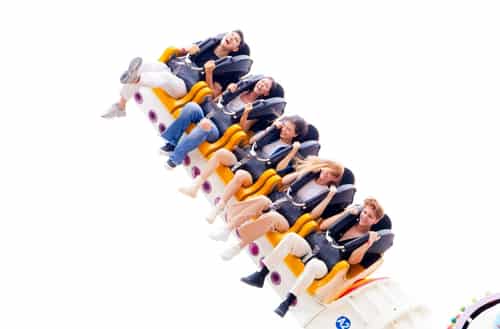
Thrill rides move emotion in sharp phases where anticipation builds through sensory cues, fear peaks at loss of control, and relief follows sudden stabilisation. Each stage is triggered by precise physical signals that the brain processes faster than conscious thought.
1. Anticipation Phase (Queue, Lock-In, Slow Rise)
In the queue, distant screams, wheel noise, and metal clicks set expectation before seating. The restraint bar locks with a firm click and tightening pressure across the shoulders and lap. As the chain lift jerks into rhythm, slow upward motion and vibration shift spatial awareness and steadily build tension.
2. Peak Fear Phase (Pause, Drop, Acceleration)
At the top, the chain sound changes to a brief quiet hum and the ride pauses, creating suspended stillness. Then a sudden release click triggers an instant drop or swing reversal. Wind hits the face, stomach pulls downward, grip tightens, breath shortens as prediction disappears completely.
3. Release Phase (Stabilisation, Reaction, Aftershock)
After peak force, motion smooths, but momentum continues. The body stays tense briefly, then pressure fades from the shoulders and chest. Heart rate remains high as silence inside the head breaks into laughter or shouting, triggered only after the brain confirms full safety following the intense moment.
Having seen how emotion builds and releases during a ride, the next step is understanding why the same experience feels completely different for each rider.
How Do Different People React to Thrill Rides?
High-thrill rides trigger the same physical forces for everyone, but reactions differ based on familiarity, perception of control, and social context. The same lift, pause, and drop can feel controlled for one rider and overwhelming for another, depending on how the brain reads each cue in real time.
1. Thrill Seekers vs First-Time Riders
At the restraint lock, thrill seekers settle in quickly, already expecting the lift and drop pattern, while first-timers tense up at the sudden pressure across their shoulders and lap. During the chain lift, experienced riders often look outward or time the climb, but first-timers fixate on the rising height and slowing ground below.
At the top pause, thrill seekers anticipate the drop calmly, while first-timers grip tighter as stillness feels unfamiliar and unstable before the sudden descent begins.
2. Fear Response vs Excitement Response
At the exact drop or swing reversal, bodies react the same way first: tightened grip, compressed breathing, and stomach drop. The difference appears milliseconds later. Some riders interpret the surge as a threat, keeping muscles rigid and leaning back defensively, while others release tension into laughter or shouting as adrenaline is processed as stimulation.
On roller coasters or pendulum swings, this split happens during the same acceleration moment, shaped by how quickly the brain recognises safety within the motion.
3. Social Influence in Group Ride Experiences
In group rides, reactions begin even before movement starts, as people observe each other’s expressions during seating and restraint locking. During the climb or pre-drop pause, one person’s nervous laugh or scream can reset the emotional tone for others.
At the peak moment, reactions often synchronise: shared shouting during a drop or collective laughter after landing. This is because the brain uses nearby responses as emotional reference points, amplifying or softening the intensity of the same ride force.
Once we understand how perception changes across riders, it becomes easier to see how real-world rides are designed to trigger these responses intentionally.
Real Ride Thrill Experience at Fun World
Fun World’s thrill rides are designed around clear physical forces like lift, drop, swing, and rotation. Each ride creates a different type of motion response based on height, speed change, and direction shifts, which together produce strong but controlled adrenaline reactions during the experience. These rides also naturally push you to take ride challenges with your friends.
1. Roller Coaster (Speed + Acceleration Cycles)
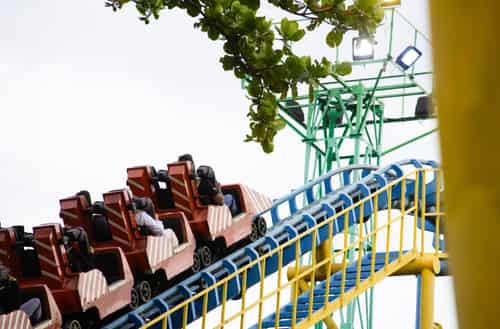
It starts slow, almost too slow, as the chain pulls you upward and the ground starts shrinking beneath you. You can hear the track before you feel it, a metal rhythm, a slight shake under the seat.
Then comes the drop, not announced, just happening. Your body reacts before your mind does. The turns that follow don’t give time to settle; each curve pulls you into a new direction, like the ride is constantly correcting your balance for you.
2. Sky Drop (Instant Free-Fall Effect)
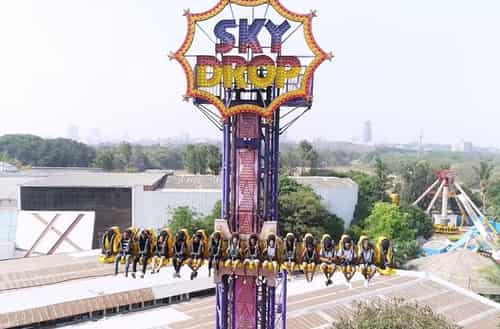
Sky Drop doesn’t ease you in. It takes you up and leaves you there long enough for silence to feel heavy. You’re not moving, but everything below looks distant enough to change how you think about height.
Then the release hits without warning. It’s not speed you notice first, it’s the absence of support. For a split second, you’re not falling, you’re just not held anymore. The catch at the bottom comes late enough for your body to fully register the drop.
3. Tsunami Ride (Pendulum Swing Motion)
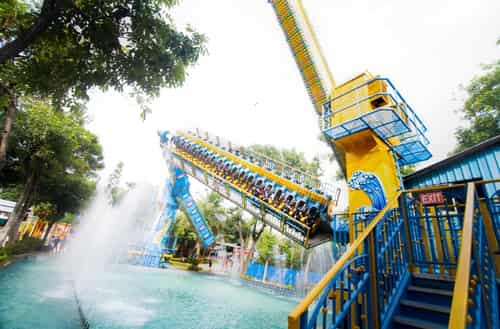
The first swings feel manageable, like the ride is still deciding how far it wants to go. Then each pass gets louder, faster, heavier. You start feeling lifted at the edges of the swing, where your body almost disconnects from the seat for a moment.
The middle is the worst part, not because it’s calm, but because you know the next swing is already building behind it. By the time it reaches full arc, you stop tracking direction and start reacting to force.
4. High Tower Ride (Vertical Lift + Controlled Descent)
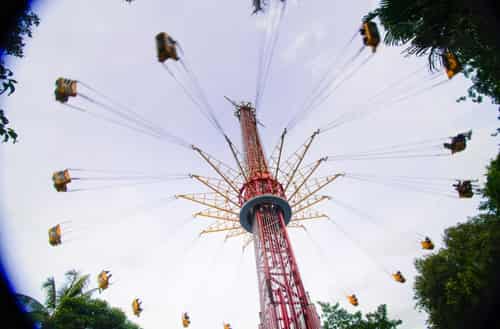
The climb is slow enough to notice everything around you getting smaller in real time. There’s a point where conversation stops naturally because there’s nothing left to add.
At the top, the pause isn’t dramatic; it’s quiet in a way that feels intentional. The drop doesn’t feel fast at first; it feels like something letting go. Even after it slows down, your body stays slightly ahead of the ride for a few seconds.
Having explored how different rides create unique force patterns, especially at Fun World, it’s important to understand why these thrill experiences are essential in amusement park design.
Also Read: Fun World Water Park Bangalore Ticket Price 2026 Guide
Why Thrill Experiences Matter in Amusement Parks?
Thrill rides matter because they turn simple motion into a full-body response driven by height changes, speed shifts, and sudden force transitions. In an amusement park setting, the experience is not just visual; it is physical, where the body reacts instantly to climbs, drops, and swings before the mind has time to process what is happening.
Here’s why thrill experiences actually define the value of an amusement park visit:
- They trigger immediate physical reactions through force changes: On a roller coaster drop or a Sky Drop release, the body responds instantly with grip tightening and posture shift as acceleration changes within seconds of movement.
- They build tension through slow setup before sudden motion: Chain lift climbs on coasters or tower ascents on drop rides stretch anticipation before releasing into fast downward or directional motion, making the transition feel sharper.
- They create controlled exposure to height and speed without actual risk: Standing at peak height on a tower ride or swinging outward on a pendulum ride feels intense to the senses, but the structure keeps the experience fully controlled and safe.
- They combine multiple sensations within a short duration: A single ride often includes climb, pause, drop, and directional shift in under a minute, compressing different physical experiences into one continuous cycle.
- They leave a stronger recall compared to passive attractions: Rides like Tsunami swings or drop towers tend to stay more memorable because the body physically registers force changes, unlike static or visual-only experiences.
Now that we’ve established the role of thrill experiences in general, let’s see how a structured environment brings all these elements together in practice.
Why Fun World Naturally Fits Thrill Ride Psychology
Fun World is built around continuous motion-based experiences where thrill is not limited to one ride type but spread across roller coasters, drop rides, pendulum swings, and water-based attractions. The idea is simple: visitors don’t just observe adrenaline moments, they move through multiple controlled thrill cycles in a single visit. This makes it especially suited for people who want to test comfort levels with speed, height, and motion in a structured environment.
What makes it effective is that the intensity is real, but the experience is managed through layout, ride sequencing, and safety systems that keep everything predictable in control.
Here’s how Fun World supports a full-day thrill-based experience in practice
- 90+ amusement and water rides across different intensity levels: The park includes a mix of high-thrill rides like roller coasters, Sky Drop, Tsunami swings, along with water slides and lighter rides like Columbus, cycle monorail, and more. This lets visitors shift between extreme and moderate experiences instead of staying in one intensity zone.
- Defined rest and shaded zones are placed between ride clusters: Seating and shaded areas are placed within walking distance of ride sections, allowing visitors to pause after high-adrenaline rides like drop towers or swings before moving into the next activity cycle.
- Controlled mechanical systems across all major thrill rides: Every major ride operates on fixed structural systems, chain lifts, hydraulic drops, pendulum arms, and braking systems. This ensures movement is pre-engineered, and force is delivered within safety-controlled limits.
- Multiple ride types that prevent sensory fatigue from a single motion pattern: Instead of repeating one type of thrill (only speed or only height), Fun World alternates between vertical drops, swinging motion, and track-based acceleration, keeping the experience varied across the visit.
In a setup like this, thrill becomes structured, repeatable, and something you can step into again once your body is ready for the next round.
Also Read: Top 5 Haunted House Amusement Park Experiences in Bangalore in 2026
Conclusion
Thrill rides work because they combine slow buildup, sudden motion changes, and controlled force shifts that the body reacts to instantly. From chain lift climbs to vertical drops and pendulum swings, each ride creates a distinct physical response where anticipation and movement happen back to back. This makes the experience feel intense in short bursts.
Fun World brings these different thrill patterns together through rides like roller coasters, Sky Drop, Tsunami, and High Tower, each built on a different motion system, track acceleration, free-fall drop, swing arc, and vertical lift. This variety lets visitors move across multiple force experiences in one continuous visit without repetition.
To experience how different types of controlled thrill feel when placed together in one structured day out, book your Fun World tickets now!
FAQs
1. What makes roller coasters and drop rides feel different from normal rides?
Roller coasters combine acceleration, turns, and dips, while drop rides focus on sudden vertical release. This difference in motion patterns creates separate physical responses, making each ride feel unique in how the body experiences force and movement.
2. Are all thrill rides at Fun World suitable for first-time riders?
Not all rides feel the same level of intensity. Fun World has a mix of high-thrill and moderate rides, allowing first-time riders to start with simpler motion-based attractions before moving to more intense experiences like drop or swing rides.
3. Why do people feel excited before a ride even starts?
The waiting phase builds anticipation through visual height, sound, and slow movement like chain lifts or tower ascents. This anticipation triggers a rising physical response even before the actual motion begins.
4. What types of thrill experiences can you expect at Fun World?
Visitors can experience multiple motion types, including roller coaster acceleration, vertical drops like Sky Drop, pendulum swings like Tsunami, and tower-based height rides. Each ride is designed around a different force and movement pattern.
More To Read
CORPORATE| July 27, 2024
Places to Visit Near Bangalore Within 50 Kms
Explore the best places to visit within 50 kms of Bangalore! Perfect for short trips, find scenic spots and local attractions just a quick drive away.

CORPORATE| July 27, 2024
Places to Visit Near Bangalore for 2 Days
Escape the city for a weekend! Discover the best places to visit near Bangalore for 2 days, with exciting activities and relaxing retreats.
CORPORATE| October 26, 2024
Dress Code for Funworld BLR: Safety and Hygiene!
At FunworldBLR, your safety and hygiene are our top priorities. To ensure an enjoyable experience for everyone, we follow internationally accepted standards for our dress code. Here’s everything you need to know before you visit!
CORPORATE| July 20, 2024
Amusement Parks in Bangalore – Top Attractions to Visit
Explore the top amusement parks in Bangalore! Discover thrilling rides, fun activities, and must-visit attractions for a day filled with excitement and joy.